
Indian benchmark indices, Sensex and Nifty, closed nearly flat on Thursday, influenced by the US Federal Reserve's interest rate hike and indications of further monetary tightening. Despite some intraday gains, caution prevailed, with foreign institutional investors continuing to offload equities. Meanwhile, the National Stock Exchange of India's (NSE) mega initial public offering opened for subscription, garnering 39 per cent subscription on its first day.
IT services stocks have had tough two years, with prices coming under pressure from 2025 and the sell-off extending through the first half of 2026.

Researchers have developed a new AI model that can monitor satellites and detect anomalies in their behaviour, significantly reducing the risk of in-orbit collisions. This tool, part of the AI4 Space Safety and Sustainability project, learns from satellite light reflections to predict motion and identify unusual activity, crucial for managing the increasingly crowded space environment.
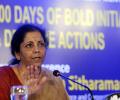
Union Finance Minister Nirmala Sitharaman expressed strong confidence in India achieving over 10 per cent economic growth, advocating for increased technology adoption and innovation. She urged overcoming scepticism and highlighted technology's transformative role in agriculture and public sector reforms, while also launching a new fund and book at an IIT Madras event.
IIT-Kanpur has developed an AI-powered "Family Score" system to identify households needing welfare support using existing government data. This system, demonstrated in collaboration with the Andhra Pradesh government, aims to provide a faster and more cost-effective alternative to traditional surveys for assessing socio-economic conditions and ensuring targeted welfare delivery.
A one-day patent workshop was held at CSIR-NIIST to promote intellectual property awareness and equip researchers and startups with essential knowledge in patent filing and innovation.
N Kalaiselvi, the first woman Director General of the Council of Scientific and Industrial Research (CSIR), has received an extension to her tenure until February 2027. Known for her pioneering work in lithium-ion batteries, Kalaiselvi's extended leadership marks a significant milestone for women in Indian science.

'When a glacier collapse or a major flood event does occur, the water will simply reclaim its original path, and anything built in that path will be swept away.'
Andhra Pradesh Chief Minister N Chandrababu Naidu has approved the establishment of India's first dedicated Quantum and AI University campus in Amaravati by NIELIT. This significant project, funded by the MeitY, Government of India, will focus on advanced technologies like Quantum, AI, and Semiconductors, integrating education, research, and entrepreneurship.
The University of Liverpool and the Indian Institute of Science (IISc) have established a joint seed fund to promote research and innovation collaborations in areas such as AI, biomedicine, quantum technology, and space.

NVIDIA has acquired AI startup Hugging Face for USD 12.9 billion, aiming to scale its platform, strengthen infrastructure, and expand access to AI for developers and institutions worldwide while maintaining an open ecosystem.
Researchers at IIT (ISM) Dhanbad have secured a patent for a novel temperature-independent optical sensor designed to precisely measure structural tilt in two directions. This lightweight sensor, utilising Fiber Bragg Grating (FBG) technology, offers enhanced monitoring capabilities for various applications including bridges, robotics, aerospace, and geotechnical systems, promising low maintenance and long-term stability checks.
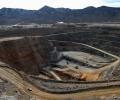
Union Mines Minister G Kishan Reddy announced that the Indian government is intensifying its support for private mining entrepreneurs seeking critical mineral opportunities abroad, working with the Ministry of External Affairs and appointing mineral officers in embassies to facilitate these efforts.

Cardiologist Dr Vivek Mahajan explains the heart attack symptoms women often mistake for acidity, stress, menopause or fatigue, and when to seek help.

Indian benchmark indices, Sensex and Nifty, experienced a significant downturn, with Sensex tanking 778 points and Nifty closing at a five-month low, driven by surging crude oil prices, geopolitical tensions, and fears of further interest rate hikes by major central banks.

Indian benchmark indices Sensex and Nifty experienced significant declines in early trade, driven by soaring crude oil prices amidst escalating tensions in West Asia, coupled with weak global market trends and foreign fund outflows.
NVIDIA has acquired AI startup Hugging Face for USD 12.9 billion, aiming to scale its platform, strengthen infrastructure, and expand AI access for developers and institutions globally while maintaining an open ecosystem.
Scientists from Agharkar Research Institute (ARI), Pune, have developed a biodegradable nanocarrier platform for targeted gene therapy in breast cancer. This strategy uses mesoporous silica nanoparticles to deliver siRNA molecules, effectively inhibiting tumour growth and reducing off-target effects, offering a promising new approach to cancer treatment.

Researchers at IIT Madras have patented a chemical-free antibacterial surface that physically eliminates harmful bacteria, including "superbugs," without relying on antibiotics or disinfectants. This innovative technology uses specially engineered nanostructures to rupture bacterial cell walls, offering a sustainable solution to Antimicrobial Resistance (AMR) for biomedical and public health applications.

'I don't think the government will sacrifice such a fine institution for monetary gains.'
Researchers at BRIC-RGCB in Thiruvananthapuram have developed a novel nanopore-based sensing technology. This innovation allows for the early and highly sensitive detection of biomarkers associated with neurodegenerative diseases like Parkinson's and ALS, addressing a critical challenge in current diagnostic methods. The technology, published in Nature Nanotechnology, uses self-assembling dual-diameter nanopore sensors to identify disease-specific biomarkers even at low concentrations.

'Separate needs from wants and minimise discretionary spending.'

'The drought situation of Maharashtra is more severe than in 1972.'

The benchmark BSE Sensex rebounded by 362 points, ending a four-day losing streak, driven by strong buying in metal, private banking, and oil and gas shares, while the broader NSE Nifty saw modest gains despite paring some advances in the closing session.

When the Internet reduced Katrina Kaif to her post-pregnancy body, it exposed how society prioritises cruel 'bounce back' ideals over genuine postpartum healing.

The larger question raised by the associations is simple: If ISRO is no longer to manufacture launch vehicles, what will happen to the institution's accumulated capabilities and the people who built them?

Researchers at Delhi's Indraprastha Institute of Information Technology have developed 'MutAIverse', a generative AI platform designed to decode DNA damage and identify potential causes of cancer. Tested on head and neck cancer patients in Guwahati, the platform successfully traced exposure to smokeless tobacco as a contributing factor. This innovation aims to shift focus from just diagnosis to understanding causative factors, potentially aiding in prevention and protection.
IIT Madras is hosting the 3rd Digital India RISC-V (DIR-V) Symposium 2026 in partnership with the Ministry of Electronics and Information Technology and RISC-V International. The symposium aims to unite stakeholders from government, industry, and academia to advance India's semiconductor innovation, focusing on indigenous processor technologies, secure computing, hardware innovation, and AI, aligning with the government's vision for India as a global semiconductor hub.

High fees do not automatically translate into better teaching or stronger clinical exposure, points out Nayagam PP, career counsellor and founder of EduJob360.
Indian physicist Deepak Dhar, a professor at ICTS-TIFR in Bengaluru, has been awarded the prestigious 2026 Dirac Medal for his significant contributions to statistical mechanics. He shares the honour with three other physicists for their work on understanding complex systems, with applications in diverse fields like biology, finance, and AI. Dhar is particularly recognised for his "sandpile model" and has previously received the Padma Bhushan and Boltzmann Medal.

There is no answer to the question of how IN-SPACe invited EOIs for ISRO's mature rockets and whether it was based on any government policy decision.

Indian benchmark indices, Sensex and Nifty, experienced declines in early trade due to elevated crude oil prices, escalating US-Iran hostilities, and renewed concerns over a potential US interest rate hike.

A recent study by scientists indicates that the Hindu Kush-Himalaya region is experiencing increased frequency and intensity of extreme weather events due to climate change, including rapid glacial melting and changing rainfall patterns. However, the research also cautions against solely blaming climate change, highlighting that human factors like population growth, commercial activities, and non-enforcement of regulations contribute significantly to the vulnerability and impact of these disasters. The study points out that many devastating floods originate from small glaciers and rain-fed streams, exacerbated by encroachment on unstable slopes and floodplains.

Indian stock markets, including the Sensex and Nifty, experienced a significant tumble in early trade, driven by escalating tensions in West Asia that pushed crude oil prices close to the USD 100-per-barrel mark, alongside selling in IT stocks and fresh foreign fund outflows.

The University of Delhi and semiconductor major AMD have signed a Memorandum of Understanding (MoU) to train up to 10,000 students and faculty in industry-relevant artificial intelligence skills over the next year. This collaboration will provide access to AMD's AI Engage Developer Programme, including its open-source ROCm AI software platform, learning resources, and developer GPU cloud credits, aiming to foster indigenous AI capabilities and bridge the gap between academia and industry.

Venu Srinivasan, a trustee and Tata Sons nominee director, has requested a regulatory inquiry into the governance of the Sir Dorabji Tata Trust, one of the charitable entities controlling 66 per cent of Tata Sons, citing concerns over trustee appointments and the trusts' involvement in commercial affairs.

Tata Trusts, the majority shareholder of Tata Sons, has stated its firm opposition to the holding company's public listing, revealing that the Tata Sons board will meet again to explore all available alternatives to listing.

Researchers at NIT Rourkela have patented a novel hybrid energy-storage system designed to significantly improve the efficiency and lifespan of electric vehicle batteries. This innovation addresses common issues like low power density and thermal stress by integrating supercapacitors with a simplified architecture, making EVs more reliable, especially in urban driving conditions.

As India's decline continued on global indices, the government first blamed methodology and then motives. This is where we remain today as we wish each other and ourselves a happy Independence Day, points out Aakar Patel.

Researchers at IIT Bombay have developed a novel, low-cost, and highly durable catalyst using cobalt, nickel, phosphate, and graphite. This breakthrough material can accelerate both hydrogen and oxygen generation from water, significantly reducing the production cost of green hydrogen by eliminating the need for expensive noble metals like platinum and iridium.
